
Naming ceremonies
Naming Ceremonies in Warwickshire
A child deserves a welcome that feels like their family. I’m Rosie Sayers, an independent celebrant based in Royal Leamington Spa, Warwickshire, and I write and lead naming ceremonies across Warwickshire and the Midlands. From £250.
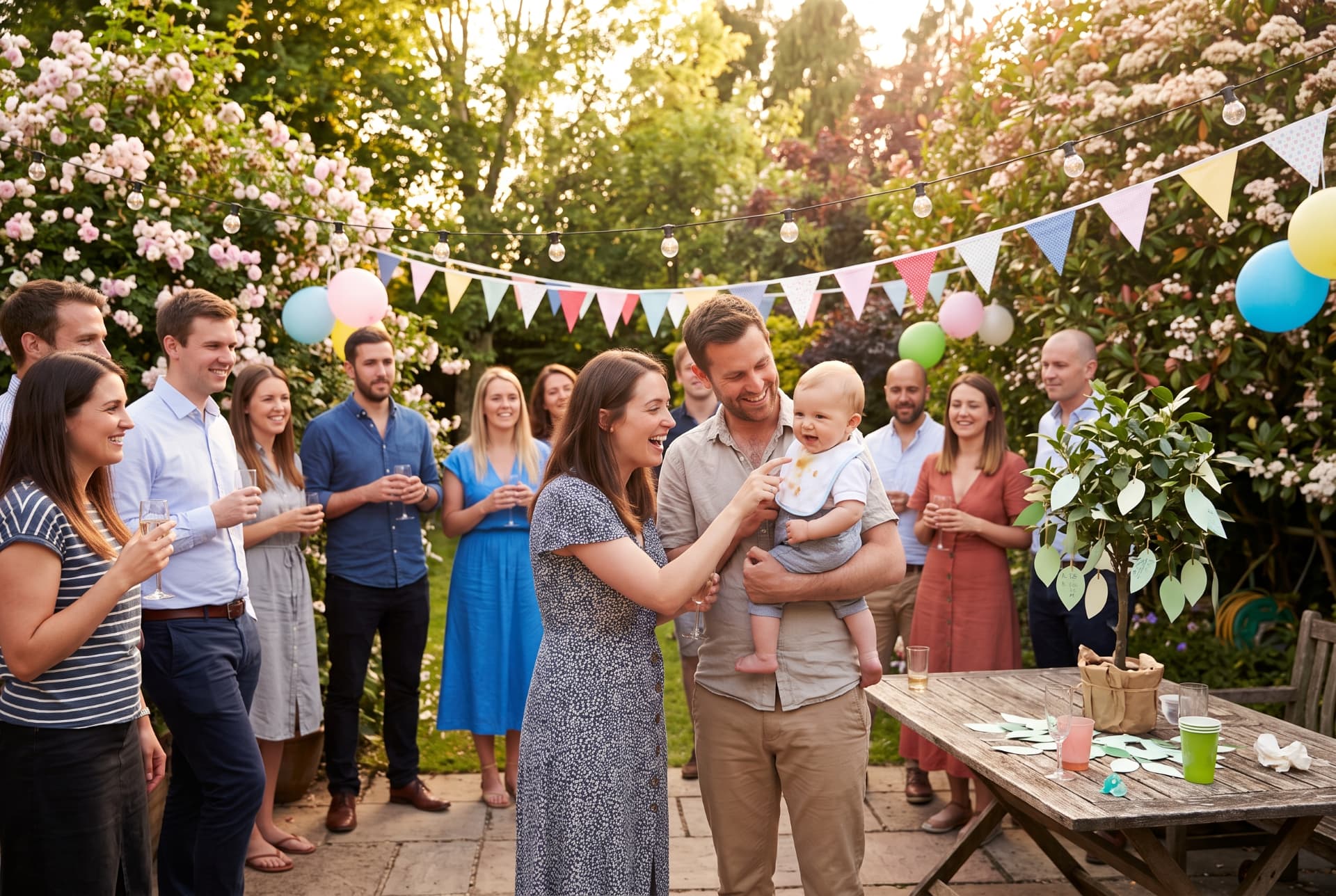
What it is
A welcome, not a formality
A naming ceremony is a chance to gather the people who matter and say something true about a child: who they are, where they have come from, and who is going to walk beside them as they grow.
It is not a legal ceremony and it is not tied to any religion. It is simply a meaningful moment, written for your family, led by someone who listens properly and holds the day gently.
Some families want something joyful and relaxed; others want it quieter and more reflective. Both are right. The ceremony is shaped around you, not the other way round.
What can be included
Promises, readings, music, siblings and keepsakes
Everything is optional. Everything is chosen because it belongs to you.
Promises
Parents, guardians and guideparents make spoken promises to the child. They can be light, profound, funny or simple - whatever genuinely fits your family.
Readings
Poems, lyrics, letters or words written by you. Chosen because they mean something, not because they sound ceremonial.
Music
A song as people arrive, something during the ceremony, or a track to finish on. Live musicians or a playlist both work beautifully.
Siblings and family
Brothers and sisters can read, help with a candle or tree-planting, or simply be named. Grandparents and friends can speak too.
Symbolic moments
Planting a tree, lighting a candle, mixing sand, creating a fingerprint tree, or writing in a book. A small ritual that becomes part of the story.
Keepsakes
A printed copy of the ceremony, a certificate for guideparents, a memory book, or a recording. Something to keep and look back on.
Who takes part
Parents, guardians, guideparents and wider family
Parents and guardians
You make the promises that feel right for you: to love, to listen, to teach, to let them become whoever they are. I help you find the words.
Guideparents or supporting adults
Friends or relatives who will play a special part in your child's life can make their own promise. Some families call them guideparents; others use godparents, sponsors, or simply special people.
Siblings
Brothers and sisters are never an afterthought. They can read, help with a symbolic moment, or be named and welcomed as part of the family.
Grandparents and friends
A few words, a reading, a blessing, or simply being named as part of the child's circle. The ceremony can include as many voices as feels right.
Where and when
Where it can happen, and how long it lasts
Any meaningful place
Gardens, village halls, pubs, hotels, woodland, a family home - anywhere that suits your family. No licence is needed because the ceremony is not legal.
Any age
Most naming ceremonies are for babies or young children, but they work beautifully for older children, stepchildren, adopted children, or a new family coming together.
Length
Usually 20 to 40 minutes - long enough to feel like an occasion, short enough for little ones and guests. I shape it to the age and energy of the room.
The process
How a naming ceremony comes together
A clear, gentle path from first idea to the day itself.
- 01
Enquiry
Send a message with your child's name, age, the rough date and where you are thinking of holding the ceremony. I reply personally and check availability.
- 02
Planning conversation
You talk about what matters to your family, who you want involved, and the tone you want - joyful, relaxed, perhaps a little emotional. I ask the questions that help shape the ceremony.
- 03
Design and writing
I design the structure, suggest readings and music, and write the promises and links. You see the draft and change anything that doesn't feel right.
- 04
The ceremony
I lead the gathering with warmth and calm so everyone feels included, the promises land properly, and the child is at the centre of it all.
Kind words
From families
“Your curiosity combined with your ability to bring together light, shade, humour and compassion in the most perfectly balanced way means you always deliver the perfect tribute. I've seen it happen many times. I'd choose you every time.”
Fees
Naming ceremonies, written for your family
from£250
- A planning conversation about your child and your family
- Writing the ceremony, promises and any roles for guideparents
- Ideas for readings, music and keepsakes
- Leading the ceremony on the day
Naming FAQs
Questions families ask
Is a naming ceremony legally binding?
Is it the same as a christening?
Where can a naming ceremony take place?
What are guideparents?
How long does a naming ceremony last?
Read all frequently asked questions about celebrant ceremonies
Tell me about your family
However much or little you have decided, I am happy to talk it through. Send a message or call 07380 747534 - I reply to every enquiry myself.